
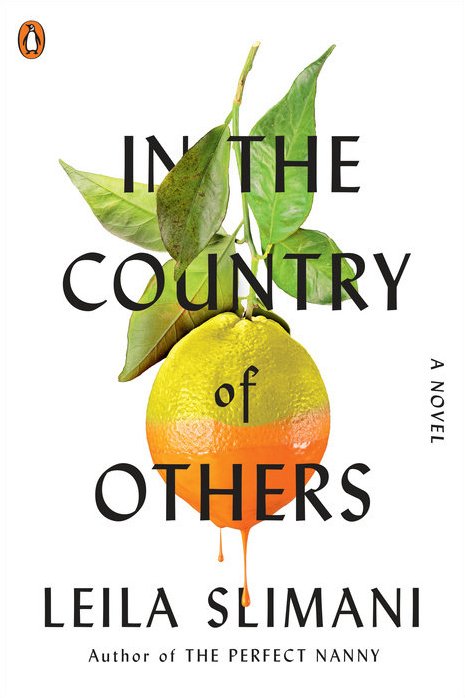
In the Country of Others: A Complex Reflection on Colonial Legacies
When I first picked up Leila Slimani’s In the Country of Others, I was drawn in by the promise of exploring Morocco’s rich culture and the intricate web of relationships formed against a backdrop of colonial history. Slimani, an acclaimed author known for her evocative prose and keen insights, seemed poised to deliver a narrative that would do justice to the complexities of identity and belonging. However, what unfolded before me was a deeply troubling portrayal that felt alarmingly steeped in Orientalist tropes.
From the outset, I found myself navigating the journey alongside Mathilde, a white French woman who, in an effort to raise her mixed-race children, seeks to impose her values on a Moroccan landscape. At first, I entertained the idea that Slimani was intentionally positioning us within Mathilde’s limited gaze. Instead of merely contrasting Western and Moroccan identities, I initially thought this exploration would serve as a critical exegesis on colonial attitudes. Yet, as I delved deeper, it became clear that the nuances I hoped for drifted away, leaving behind a narrative marred by reductive stereotypes.
The dynamics between Mathilde and her husband, Amine, are laden with tension—she adores his physicality while simultaneously demanding he conform to a Western ideal. Slimani’s depiction of Amine often teeters on fetishization; his attributes are celebrated only in the way they serve to underscore Mathilde’s European sensibilities. This relationship, while emblematic of a colonial mindset, lacks depth—it misses the grave complexities faced by Amine as a colonized individual, highlighted further by his nonchalance toward Moroccan revolutionary aspirations.






The characters populating this narrative often read like caricatures of Orientalist clichés. Amine’s mother, steeped in superstition, and Omar, a violent stereotype of the “angry Arab,” are too often stripped of their humanity and agency. Their representation feels less like a nuanced portrayal and more like a canvas onto which Slimani paints her own colonial sympathies. Even Selma, the only character seemingly framed positively, garners favor only because she yearns for a lifestyle aligned with Western values.
Slimani’s writing, while at times lyrical, often betrays a lack of self-awareness in its irony. Mathilde breathes a sigh of relief upon her return to France, suggesting a liberation that glosses over the pervasive gender inequalities faced by women of that era. The absence of awareness about the brutal realities of colonialism—like the trafficking of Moroccan women—is profoundly disconcerting. These glaring omissions leave me questioning Slimani’s intentions and understanding of her own narrative.
In a moment where Aicha, a secondary character, suddenly adopts a revolutionary fervor, the plot takes a disjointed turn, seemingly setting the stage for a sequel rather than resolving any complexities. Such an ending felt more like a convenient plot device than a genuine exploration of Moroccans fighting for their autonomy.
While I wanted to approach In the Country of Others with an open mind, my experience turned into a deep frustration, revealing Slimani’s narrative as one that caters to a French colonial gaze devoid of critical engagement with its subject matter. This book may appeal to those curious about Morocco through a European lens, but as someone who yearns for authentic representations of postcolonial complexities, my hopes quickly unraveled.
Ultimately, while Slimani’s literary prowess shines through in moments, the broader implications of her work leave me grappling with both disappointment and disillusionment. I wish for more nuanced discussions about identity that reflect the true struggles and dignity of those often rendered invisible in such narratives.
[ad_2]
Discover more about In the Country of Others on GoodReads >>