
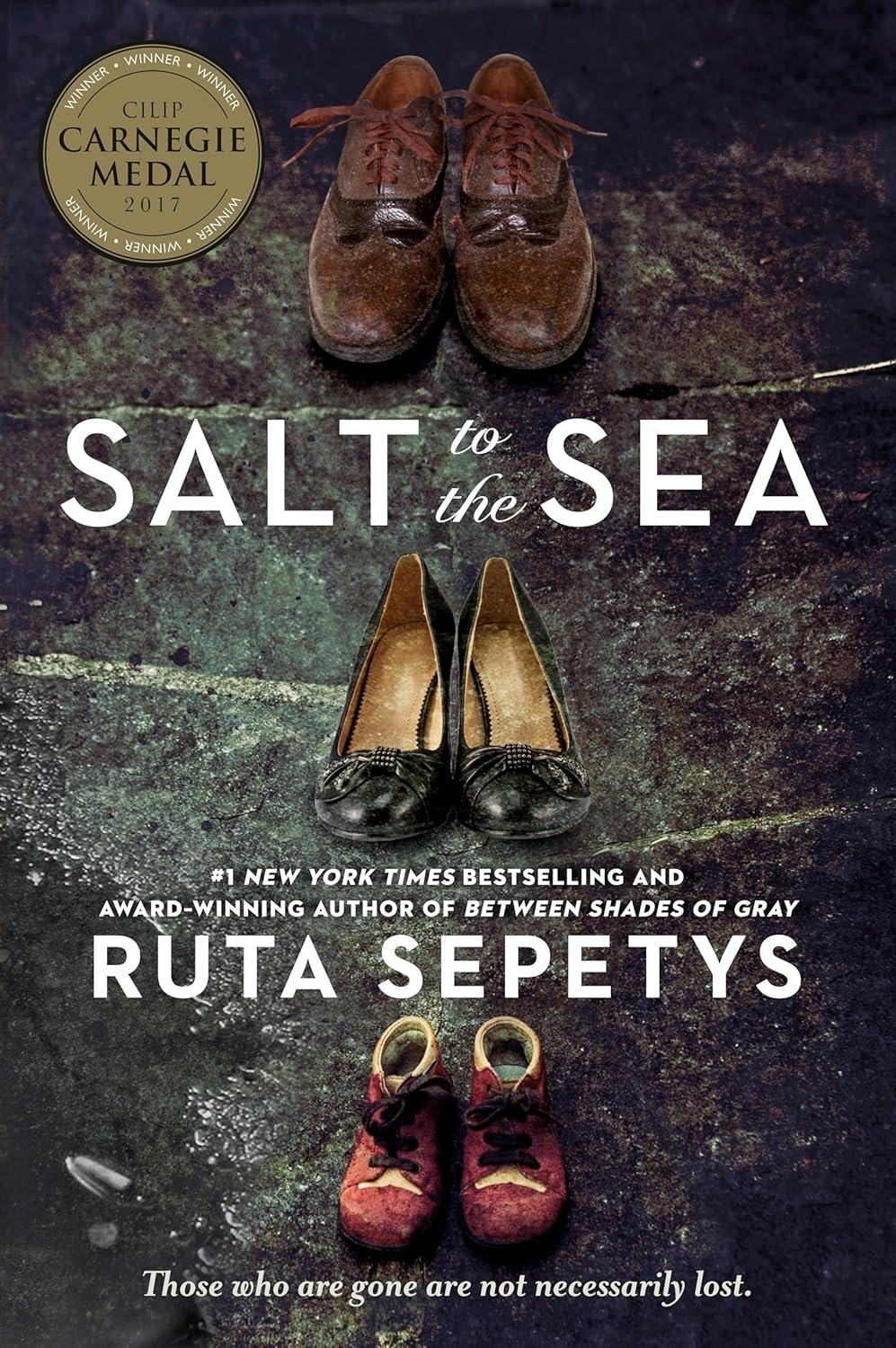
Exploring the Depths of Resilience: A Review of Salt to the Sea by Ruta Sepetys
When I first picked up Salt to the Sea by Ruta Sepetys, I was drawn in by the promise of a historical tragedy that had somehow slipped through the cracks of our collective memory. A book that not only serves as a narrative but as a poignant reminder of the human cost of war was exactly what I needed for my reading journey. Little did I know, this book would leave an indelible mark on my heart.
Set during the chilling winter of 1945, the novel follows four refugees—Florian, Joana, Emelia, and Alfred—as they seek passage on the ill-fated ship Wilhelm Gustloff. Each character brings their own unique perspective and emotional baggage, enriching the narrative like vibrant brushstrokes on a somber canvas. As I journeyed through the snowy landscapes with them, I felt their hopes and fears woven intricately into the fabric of the story.
Florian, the art restorer with secrets hidden beneath his stoic demeanor, serves as a silent protector. Joana, a Lithuanian nurse, embodies kindness and resourcefulness, making her my favorite character. Emelia, a Polish girl battling despair, radiates an innocence that evokes deep empathy. Lastly, we have Alfred, whose toxic mindset contrasts sharply with the others. Initially, I found myself bracing for distaste, but Sepetys handles his character with such complexity that I was compelled to consider the shades of gray inherent in humanity, even in its darkest corners.





The writing in Salt to the Sea stands out for its lyrical beauty, balancing meticulous research with emotionally charged prose. The short chapters—often only a couple of pages—create an addictive pacing that left me breathlessly flipping through the pages. Each chapter concludes with a mini cliffhanger, urging me to "just read one more" until I found myself devouring the entire book in a matter of days.
One of the most engaging aspects of the story is how Sepetys skillfully interlaces historical facts with the emotional journeys of her characters. The sinking of the Wilhelm Gustloff, which resulted in a staggering loss of life, feels all the more gut-wrenching when viewed through the eyes of the individuals aboard. I remember vividly a quote from the book that encapsulates the hopelessness of the situation—echoing the despair shared by countless victims throughout history.
This haunting narrative doesn’t merely recount the past; it immerses you in it. You can almost feel the biting cold of the water, the frantic heartbeats of those clinging to hope amid chaos. Despite the despair, moments of camaraderie and bravery shine through, reminding us of humanity’s capacity for kindness even in the bleakest times.
I genuinely believe that Salt to the Sea is a gift for anyone interested in historical fiction, particularly those exploring the lesser-known tragedies of World War II. It’s a book that will not only enlighten you but also move you profoundly. My reading experience wasn’t just an exploration of history; it was a deeply personal encounter with resilience, courage, and the stark reality of survival. I emerged from this narrative forever changed, and I encourage you to embark on this journey to discover why—after all, our understanding of history is only as rich as the stories that tell it.
[ad_2]
You can find Salt to the Sea here >>